


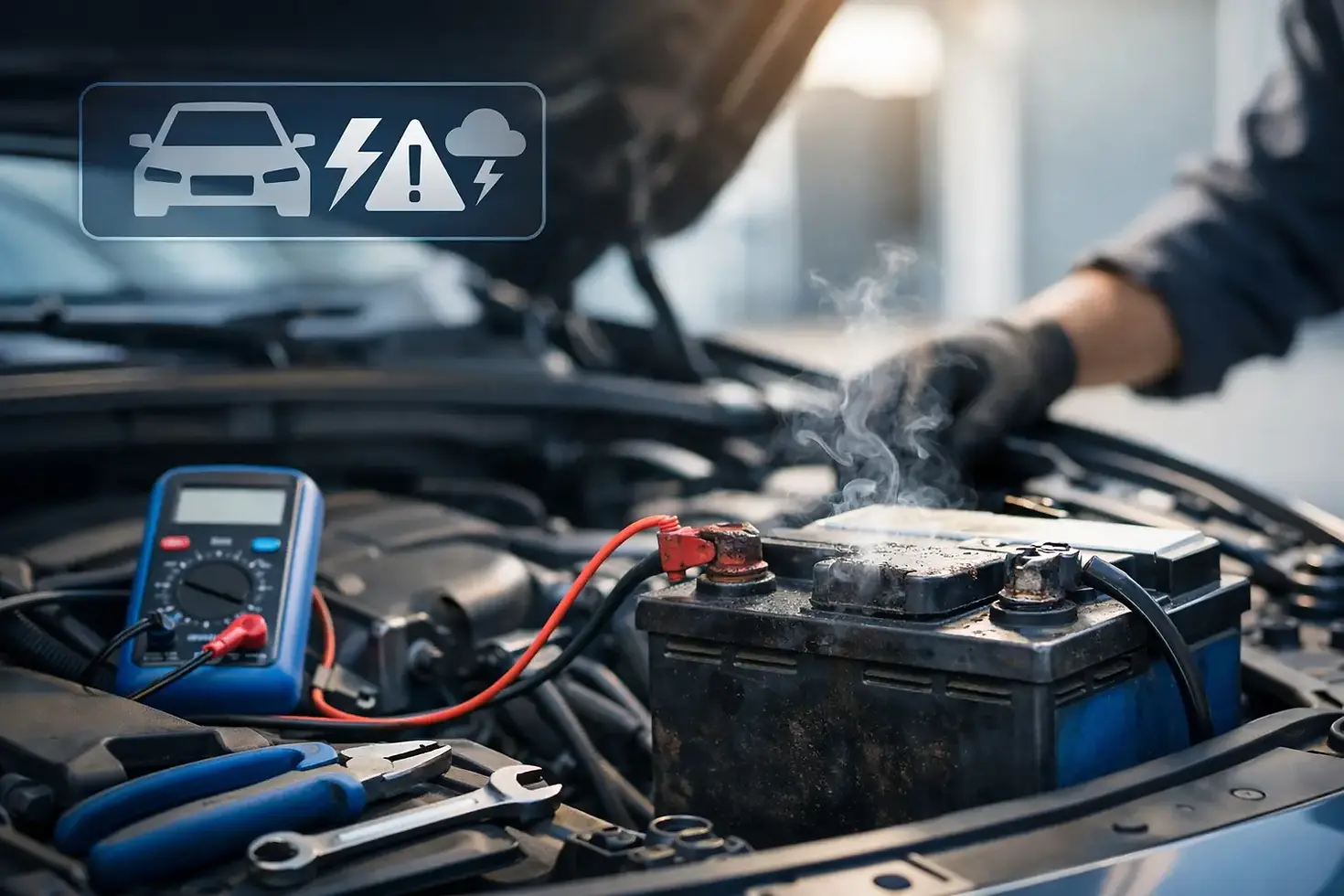
What Causes Repeated Car Battery Failure?
You replace the battery, the car starts fine for a few days or weeks, and then it lets you down again on a cold morning or after a normal trip to work. If you are asking what causes repeated car battery failure, the battery itself is only part of the story. In many cases, the real fault sits elsewhere in the vehicle, and until that is found, the problem keeps coming back.
Repeated battery trouble is frustrating because it wastes time, money, and confidence in the car. The good news is that there is usually a clear reason behind it. Once the cause is identified properly, the fix is often straightforward.
What causes repeated car battery failure most often?
The most common reason is that the battery is not being charged properly while you drive. That can point to the alternator, the charging circuit, the battery terminals, or even a worn drive belt. A battery can only do its job if it is regularly topped back up, and if that process is interrupted, it slowly runs flat even if the battery is fairly new.
Another frequent cause is a parasitic drain. That means something in the car is still using power when the ignition is off. Sometimes it is obvious, such as an interior light, boot light, or dash cam left running. Sometimes it is less obvious, like a control module failing to sleep properly or an aftermarket accessory wired badly.
Short journeys can also play a bigger part than many drivers realise. If you mostly use the car for quick school runs, traffic-heavy commuting, or local errands, the battery may never fully recover from each engine start. Over time, that repeated undercharging weakens it.
Then there is the age and condition of the battery itself. Even a decent battery has a limited life. Cold weather, heat, vibration, and repeated deep discharge all shorten it. If the battery has been flattened several times, its performance may never come back fully.
The charging system may be the real issue
When a battery keeps failing, the alternator should be one of the first things checked. Its job is to supply power to the vehicle and recharge the battery while the engine is running. If it is undercharging, the battery gradually loses reserve. If it is overcharging, that can damage the battery as well.
This is why simply fitting another battery can become an expensive cycle. The new battery may seem to solve the issue at first because it arrives fully charged, but once that charge drops, the same symptoms return.
Poor electrical connections can create similar trouble. Corroded terminals, loose battery clamps, damaged earth straps, or wiring faults all interfere with the flow of power. In some cases the battery is healthy and the alternator is working, but the charge is not reaching where it should consistently.
A proper test matters here. Voltage readings with the engine off and running, load testing, and charging-system checks give a much clearer picture than guessing.
Battery drains that happen while parked
If the car struggles to start after standing overnight or over a weekend, there may be a drain when the vehicle is parked. This is one of the biggest answers to what causes repeated car battery failure, especially in modern cars with more electronics than ever.
Some level of battery draw is normal. Alarm systems, immobilisers, and onboard memory need a small amount of power. The problem starts when that draw becomes excessive.
Common causes include a glovebox or boot light staying on, faulty door switches, dash cams in permanent recording mode, phone chargers left plugged in, and aftermarket stereos or trackers that were not installed correctly. Faulty relays and control units can also stay active when they should shut down.
These faults are not always easy to spot without testing. You might not see anything obvious, but the battery keeps losing charge every night. In that case, measuring the current draw and tracing the circuit is the sensible way forward.
Driving habits can shorten battery life
Not every repeated battery problem points to a broken part. Sometimes it comes down to how the vehicle is being used.
Starting the engine takes a lot of power. If the car is then only driven for ten minutes through stop-start traffic with the heater, lights, heated screens, and radio all running, the alternator may not have enough time to replace what was used. Do that day after day and the battery stays in a partially discharged state.
That matters because car batteries last longer when they are kept properly charged. Leaving them undercharged for long periods can lead to sulphation, where crystals build up inside the battery and reduce its ability to hold charge.
Seasonal use can cause similar issues. Vehicles that sit unused for long stretches, especially in winter, often develop flat or weakened batteries. Vans, second cars, and occasional-use vehicles are particularly prone to this.
Cold weather exposes weak batteries fast
A battery that seems acceptable in mild weather can fail as soon as temperatures drop. Cold conditions reduce battery performance and make the engine harder to turn over, so the battery has to work harder at exactly the wrong time.
That is why many repeat battery faults show up first thing on frosty mornings. The cold did not necessarily cause the fault on its own. More often, it exposed an existing weakness in the battery, charging system, or electrical condition of the vehicle.
If your battery problems only seem to happen in winter, do not assume that is normal. It is often a sign the system is already on the edge.
The wrong battery can also cause trouble
Not every battery suits every car. Some vehicles, especially those with start-stop systems or high electrical demand, require a specific battery type and rating. Fitting a cheaper or incorrect replacement may lead to poor performance, warning lights, or early failure.
Battery size matters too. If the battery does not have enough cold cranking power or reserve capacity for the vehicle, it may struggle even when everything else is working as it should.
This is one reason proper matching is important. Saving a little on the wrong battery can cost more when the car keeps failing to start.
Signs the problem is more than just an old battery
There are a few clues that point to a wider fault. If the battery warning light comes on while driving, the charging system needs attention. If the engine cranks slowly even after the battery has recently been replaced or charged, something else may be dragging the system down.
You may also notice flickering lights, electric windows moving slowly, dashboard glitches, or the car only starting reliably after a jump start. A swollen battery case, strong smell, or visible corrosion around the terminals can suggest overcharging or internal battery damage.
These signs are worth taking seriously because repeated flattening does not just affect starting. It can also strain the starter motor and create faults in sensitive electronics.
Why guessing usually costs more
It is tempting to replace the battery first and hope for the best. Sometimes that works, particularly if the battery is genuinely old and tested poor. But when the problem keeps coming back, guesswork becomes the expensive route.
A proper diagnosis saves money because it targets the cause, not just the symptom. That may mean checking battery health, alternator output, charging voltage, earth connections, and parked current draw. It may also mean looking at how the car is used day to day.
For drivers in places like Cwmbran, Newport, Bristol or Bath, this matters even more when a non-starting vehicle can disrupt work, school runs, and everything else built around having reliable transport. Fast help is useful, but accurate diagnosis is what stops the same fault returning.
What you can do before it gets worse
If the car has started showing signs of battery trouble, try to avoid repeated jump starts without getting it checked. Jump starting may get you moving, but it does not solve the cause and can sometimes hide a charging fault for a short while.
Check for obvious issues such as loose terminals, lights left on, or accessories plugged in permanently. If your driving is mostly short trips, a longer run may help maintain charge, but only if the charging system is healthy in the first place.
If the battery has gone flat more than once, or if it is less than a couple of years old and already struggling, that is usually the point to stop guessing and have the vehicle tested properly. A dependable garage or mobile technician should be able to tell whether the fault is the battery, the alternator, a drain, or a connection problem.
At 247 Auto Centre, we know most drivers do not want a lesson in vehicle electrics. They want clear results, honest advice, and a car that starts when it should. That is exactly how battery faults should be handled.
Repeated battery failure is rarely random. There is nearly always a reason, and once that reason is found, getting back to a reliable, stress-free start becomes much simpler. If your battery keeps letting you down, the best next step is not another guess - it is a proper check before the problem leaves you stranded again.


Comments